Renovating a high-end private residence is rarely about replacement. It is about precision — preserving proportion, understanding structure, and integrating modern systems without disrupting architectural identity. In premium residential projects, even minor dimensional inaccuracies can compromise finishes, alignments, and detailing.
Before materials are selected or layouts adjusted, the success of a renovation depends on one fundamental element: reliable spatial data.
This is where 3D laser scanning becomes not simply a surveying tool, but a digital foundation for architectural decision-making.
Why Traditional Measurement Is Not Enough
Luxury residential properties often include complex geometries — vaulted ceilings, custom millwork, layered facades, ornamental detailing, non-orthogonal walls. Many high-end homes, particularly historic residences, also contain subtle deformations accumulated over time.
Manual measurement methods tend to simplify these conditions. But high-end design does not tolerate approximation.
In premium renovation projects, architects must understand:
- exact wall deviations
- floor level variations
- ceiling irregularities
- facade alignment
- stair geometry
- structural positioning
Without millimeter-level clarity, design intent may conflict with reality during construction.
From Site Capture to Digital Model
High-precision terrestrial laser scanning captures millions of data points across interior and exterior spaces. Instead of measuring selected reference points, the entire spatial envelope is documented.
The result is a dense point cloud representing the true condition of the building.
From this dataset, a coordinated BIM model can be developed, reflecting:
- real structural geometry
- actual wall thickness
- ceiling heights and slopes
- window and door positioning
- integration of MEP systems
In high-end residential renovation, this digital reconstruction enables design teams to test interventions before physical execution.
Supporting Architectural Redesign
Luxury renovation projects often involve:
- reconfiguring kitchens and bathrooms
- opening interior spaces
- integrating modern mechanical systems
- restoring facade elements
- adjusting circulation
With accurate digital documentation, architects can experiment confidently. Proposed structural changes can be evaluated against existing load-bearing elements. Interior modifications can be tested without guesswork.
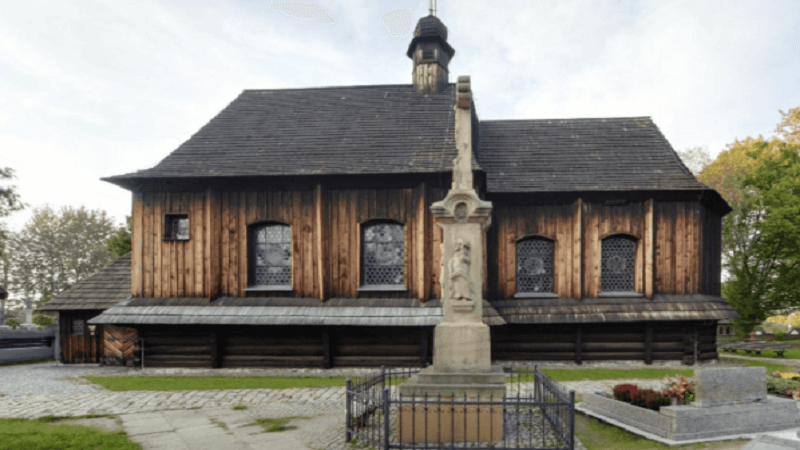
In projects involving historic properties, digital documentation ensures that original proportions and decorative details are preserved while contemporary elements are introduced seamlessly.
Rather than redesigning over uncertainty, architects design with spatial clarity.
Integrating Engineering Systems Without Compromise
High-end homes demand discreet integration of HVAC, plumbing, electrical networks, and smart systems. In renovation scenarios, routing new systems through existing structures can become one of the most complex challenges.
Laser scanning enables:
- accurate ceiling cavity analysis
- detection of spatial congestion
- evaluation of structural constraints
- coordination between architecture and engineering
This reduces the risk of on-site clashes and unexpected modifications that could damage finishes or architectural detailing.
Accuracy as Risk Mitigation
In premium residential projects, the cost of error is not limited to materials — it includes reputation, client trust, and project timelines.
A millimeter deviation in cabinetry alignment, stair fabrication, or custom glazing can cascade into costly rework. By grounding design decisions in verified spatial data, the likelihood of unforeseen site conditions is significantly reduced.
Digital documentation becomes a risk-control instrument, not just a technical service.
Engineering teams such as ScanM2 support this process by transforming physical site conditions into structured digital environments, allowing architects and contractors to operate from a shared, reliable dataset.
The Role of Digital Foundations in Contemporary Renovation
Today’s high-end residential renovation is increasingly defined by precision. Clients expect seamless integration of modern comfort within existing architectural character. Designers must balance innovation with preservation.
3D laser scanning establishes the foundation for that balance.
By capturing existing structures with exceptional accuracy and translating them into coordinated digital models, architects gain the clarity needed to intervene responsibly.
In this context, technology does not replace craftsmanship. It safeguards it.
A carefully documented building becomes a stable platform for transformation — ensuring that redesign enhances rather than distorts architectural identity.