
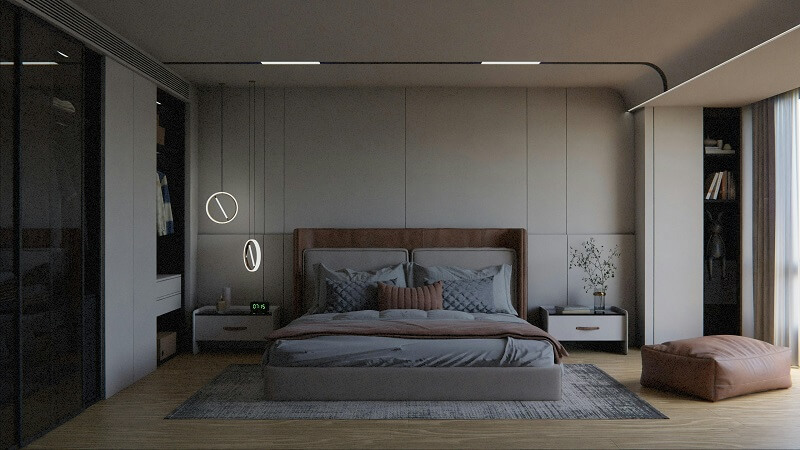
Bedroom design never starts with paint or curtains. It starts with human bodies, their odd habits, and their need for real rest. Most rooms fail because someone pursued a catalogue fantasy rather than physics and proportion. A room either supports sleep or it fights it. Scale, light, sound, and temperature all affect the sleeper. Good design turns that gang into allies. Once someone accepts that, color choices suddenly matter less. The bones of the room start to matter much more, and the logic of comfort takes over.
Start with the Bed, Not the Wall Color
Everything revolves around the bed. People often cram a large frame into a small space and wonder why the room feels like a storage unit. Couples in small rooms prefer a queen size mattress because it is comfortable yet small enough to leave breathing space. Each accessible side should have two feet of walking space. More when possible. Nightstands should match bed height, not fashion. Darkness makes the body dread reaching up or down. Sleep is silently protected by muscle memory.
Proportion: The Silent Room Judge
Furniture either respects the room size or bullies it. A low ceiling demands lower furniture so the eye can stretch horizontally. Tall wardrobes in such rooms loom like concrete towers. Large rooms with tiny pieces feel like model homes in a showroom. The trick is visual weight. If the bed is heavy and solid, other items need slimmer legs or lighter finishes. Rugs should sit under at least the front legs of the bed. A small rug under a big bed signals design confusion. The brain spots that instant mismatch and never quite relaxes around it.
Light, Color, and the Nervous System
Lighting in many bedrooms behaves like an interrogation room. One harsh ceiling fixture. No mercy. A better approach is to layer light. The design should include soft ambient lighting, focused task lamps for reading, and, if desired, one accent source. The lights are all dimmable and easily accessible from the bed. Color follows the same logic. High-contrast schemes wake the brain. Softer contrasts calm it. Cool colors tend to recede, making small rooms feel wider. Warm neutrals feel cozy, but they can turn stuffy if everything matches. The wall behind the bed can anchor the room with a slightly deeper shade that still feels quiet.
Storage, Clutter, and Visual Breathing Room
Clutter is not good for rest. Not dramatically. Quietly. Every visible object makes a tiny request for attention. Storage must absorb most of that noise. Tall wardrobes can work if they line up in a clean block, almost like a built-in wall. Random mismatched pieces create jitter and mental friction. Under-bed storage drawers beat plastic bins for sanity. Surfaces near the bed should hold only what gets used nightly. Anything else moves out. Space on the floor and walls is not wasted. It functions as visual oxygen for the room and keeps thoughts from racing.
Conclusion
True comfort in a bedroom never arrives by accident. It comes from ruthless editing, honest measurements, and attention to how a body moves in the dark. Proportion keeps the space from shrinking or shouting. Comfort keeps the nervous system from staying on high alert. When both align, even modest rooms feel calm and generous. The bed fits. The light behaves. Storage stays quiet. A person enters and exhales, and the room answers back with stillness. That simple, unremarkable piece signals successful design and proves the choices worked.