
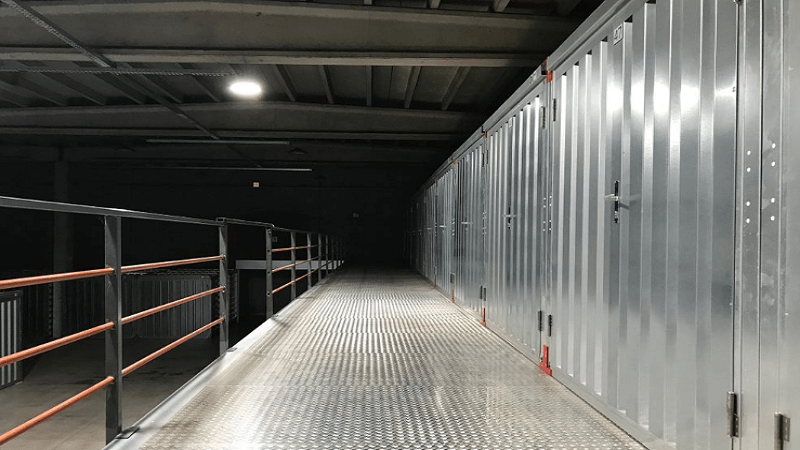
Mezzanines look simple from the outside.
“Just a raised platform with some steel. Columns and stairs maybe.” Wrong. There is an incredible amount of engineering behind every safe, structurally sound mezzanine that most warehouse owners will never see.
And here’s the thing…
When corners are cut on engineering, people suffer the consequences. Slips, trips and falls account for 27% of all non-fatal injuries that occur in a warehouse, and falls from ladders and elevated platforms are responsible for 20% of all fatal warehouse accidents.
That’s a big deal.
This manual deconstructs what goes into building an industrial storage platform and why each component is important for worker safety.
Here’s what’s inside:
- Why Mezzanine Engineering Matters
- The Load Calculations Behind The Scenes
- Structural Components That Do The Heavy Lifting
- Safety Features Built In From Day One
- What To Look For In A Mezzanine Builder
Why Mezzanine Engineering Matters
A mezzanine is not just additional storage space. It is an accessible working platform where people walk and pallets are stored, and occasionally where forklifts enter and exit.
That means failure isn’t an option.
Whether you’re storing employees, inventory or both on your mezzanine office floor, the platform beneath you must support every ounce of weight without bending, sagging or moving. This is where structural engineering comes into play – and where KABTech warehouse mezzanines make the guesswork easy.
Proper engineering protects three big things:
- People — workers above and below the platform
- Inventory — the goods stored on top
- Your business — fines, downtime and lawsuits add up fast
Fall injury workers compensation claims average over $36,000, while fatalities can cost upwards of $1.4 million per incident.
That’s why this stuff isn’t optional. It’s foundational.
The Load Calculations Behind The Scenes
Before a single beam gets cut, a structural engineer is doing the math.
A lot of math.
They consider three categories of load the mezzanine will experience daily:
- Dead load: the permanent weight of the structure itself (beams, decking, stairs, handrails)
- Live load: the variable weight from people, equipment, shelving and goods
Point load: load concentrated on a relatively small area such as a pallet jack wheel or machine leg
Get these numbers wrong and the whole platform is compromised.
Here’s a quick reference on standard load ratings used by engineers:
- 60–90 psf — minimum use, conveyors or maintenance access
- 125 psf — light storage warehouse or light manufacturing
- 250 psf — heavy storage warehouse or heavy manufacturing
- 500 psf — distribution centers with heavy machinery
The engineer also has to consider dynamic loads. That means the forces of rolling equipment, vibrating machinery and forklift traffic. If you don’t consider those, the structure might hold still but come crashing down as soon as work starts.
Oh, and the slab. Remember the slab. That concrete floor below has to hold up all of those column loads as well — and not all slabs can do that. Engineers will verify slab thickness, soil conditions and even seismic requirements.
Structural Components That Do The Heavy Lifting
Now let’s talk about the actual parts that make a mezzanine work.
Each piece has a specific job to do.
Columns
Columns are vertical members which transfer the entire load to the floor system. Interior columns generally carry the highest load because they receive loads from more than one direction. Spacing also plays a factor – greater spans are desirable for aesthetics, but reduce uniform load capacity.
Beams
Beams are the horizontal members that run between columns, supporting the deck. Deeper beams are exponentially stronger and stiffer than shorter beams. So the engineer must balance beam depth with headroom below.
Decking
This is the top surface that workers will walk on. There are many options including bar grating to resin coated panels to complete concrete decks. It all depends on what you will be storing, if wheels will roll across the deck and how much weight needs to be supported.
Connections
Don’t sleep on this one.
Don’t forget the welds and bolts that hold everything together. Just like the beams, the connections are critical. A poorly designed connection makes an otherwise perfect mezzanine an extremely unsafe place to work.
Safety Features Built In From Day One
Here’s where great engineering really stands out…
Its not only lifting capacity. Its safety for the workers on the platform each day.
A well-designed mezzanine includes safety features baked right into the structure:
- Guardrails — need to be a minimum of 42 inches above the working surface according to OSHA regulations
Toe boards – prevent tools and small objects from falling over the edge onto people below
- Safety gates — dual-gate systems prevent open ledges during pallet loading
- Non-slip decking — reduces the risk of slip-related falls
- Proper staircases — with handrails, code-compliant rise and run, and non-slip treads
OSHA mandates fall protection at 4 feet or more in the general industry. Mezzanines nearly always have heights far greater than that — so take shortcuts and you’ll be breaking the law, not just putting yourself at risk.
And here’s something most people miss…
Safety gates should be installed properly. Installing one swing gate propped open with a pallet is non-compliant with OSHA mezzanine standards and endangers workers to severe fall hazards. This is where dual-gate systems have become the industry standard for pallet drop off zones.
What To Look For In A Mezzanine Builder
Not every mezzanine builder is the same.
Some contractors build to spec. Some cut corners to get the contract. Learn how to tell the difference and save your business heartache (& cash) in the long run.
Here’s what a quality builder always provides:
- Stamped engineering drawings from a licensed structural engineer
- Load ratings clearly documented and visible on the platform itself
- Code-compliant designs that meet OSHA and IBC standards
- Fall protection planning baked into the design — not bolted on after
- Inspection and certification documentation
Ask to see previous work. Ask about load testing. Ask questions regarding point loads.
Your real engineering partner will have already figured those questions out themselves.
The Bottom Line
Heavy-duty storage platforms only look simple from the outside.
There is a pile of engineering calculations behind every safe mezzanine. Code compliant designs, engineered structural components working together. Leave one out and your platform is a liability.
The good news?
Properly designed from inception, a mezzanine can provide years of safe and productive service. A mezzanine increases your usable square footage without increasing your footprint and it keeps your employees safe.
Always remember this before you sign off on a platform — ask the tough questions and work with a builder who values engineering as the groundwork, not an afterthought.