
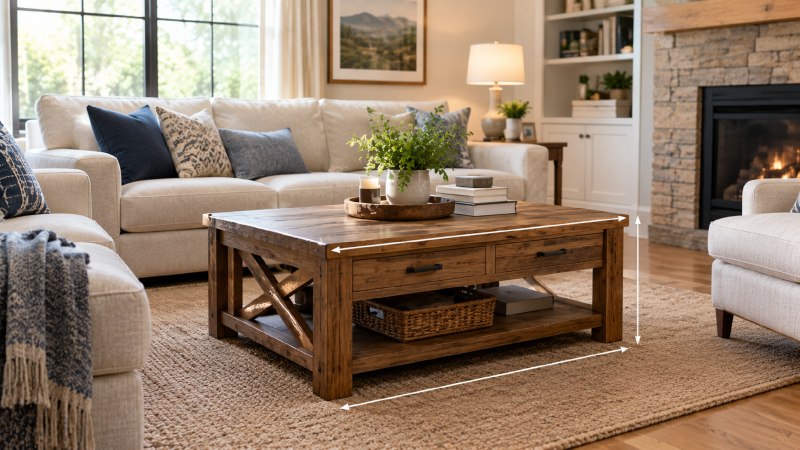
Architects talk about proportion long before they talk about finishes. A room can have beautiful floors, good light and expensive furniture and still feel wrong if the pieces in it are the wrong size for the space or for each other. In most living rooms, the piece that settles that balance is not the sofa or the television. It’s the coffee table.
It sits at the center of the seating area, sets the walking paths around it and decides whether the room reads as open or crowded. Get its size, shape and height right, and the rest of the layout tends to fall into place.
The Coffee Table As A Spatial Anchor
In an open floor plan, living areas often have no walls to define them. The sofa marks one edge, a rug marks the floor, and the coffee table pulls everything toward a single point. It gives the eye a place to land and tells people where the conversation happens.
That role is why designers treat the table as part of the room’s structure rather than an accessory. A table that’s too small looks lost and leaves the seating feeling scattered. One that’s too large blocks movement and makes the room feel heavy. The goal is a piece that connects the seating without dominating it.
Proportion Rules Worth Knowing
A few general guidelines help most rooms.
Length
A coffee table usually looks balanced at about two-thirds the length of the sofa. That leaves space at each end and keeps the arrangement from feeling boxed in.
Height
The tabletop should sit at roughly the same height as the sofa seat, or an inch or two lower. That makes it easy to reach a cup or a book without leaning awkwardly.
Clearance
Leaving 14 to 18 inches between the sofa and the table gives enough legroom while keeping everything within reach.
Circulation
Main walkways around the seating area need about three feet so people can pass without turning sideways.
These numbers aren’t strict laws, but they’re a reliable starting point. Painter’s tape on the floor is still the easiest way to test a layout before buying anything.
Choosing A Shape That Fits The Room
Shape changes how a room flows as much as size does.
Rectangular tables
Rectangular tables suit long sofas and sectionals. They echo the lines of the seating and give plenty of surface for drinks, books and decor.
Square tables
Square tables work well with L-shaped sectionals or seating arranged around all four sides. They create a centered, balanced look and are easy to reach from every seat.
Round or oval tables
Round or oval tables soften rooms with many straight lines and make it easier to move around in tight spaces, since there are no corners to bump into.
The architecture of the room matters too. A long, narrow space usually calls for a rectangular table that follows the room’s direction. A squarer room with a fireplace or large window as its focal point can handle a square table that sits right at the center.
Visual Weight And Material
Two tables of the same size can feel completely different depending on what they’re made of. Glass and thin metal look light and almost disappear. Solid wood looks grounded and permanent.
Neither is better in every case. Heavier materials help anchor large rooms with high ceilings, where lighter pieces can look flimsy. In smaller rooms, a solid table works best when the surrounding furniture is kept simple so the space doesn’t feel crowded.
Solid log construction carries a lot of visual weight, and it also brings texture. Aspen, for example, shows distinctive grain patterns and natural knots, so each piece looks a little different. A protective sealant brings out the wood’s natural tones while guarding against everyday wear, which matters for a surface that sees cups, plates and feet on a daily basis.
Storage Without Clutter
The surface of a coffee table tends to collect things: remotes, chargers, magazines, coasters, mail. Once that happens, the piece meant to organize the room becomes the most cluttered spot in it.
Built-in storage solves much of that problem. A farmhouse coffee table with storage keeps everyday items close by while leaving the top clear for a tray, a few books or a vase. Smoothly gliding drawers are easy to open from a seated position, which makes it more likely they’ll actually be used.
For people who prefer a minimal look, a table without drawers offers a clean, open surface for displaying decor or serving drinks when friends come over. In that case, nearby storage such as side tables, baskets or a media cabinet can take on the job instead.
The right choice depends on the household. Families with kids, frequent movie nights or small homes usually benefit from drawers. Rooms used mainly for hosting may work better with an open top.
Balancing Rustic Wood In A Modern Room
Rustic wood tables suit cabins and farmhouse interiors naturally, but they also work in contemporary homes when treated as a deliberate contrast. Clean walls, simple sofas and modern lighting let a solid wood table become the warm, textured center of the room.
The key is restraint. One strong natural piece looks intentional. Too many heavy wood pieces in the same space can make the room feel themed rather than designed.
A Quick Planning Checklist
- Measure the sofa and aim for a table about two-thirds its length.
- Match the tabletop height to the sofa seat.
- Leave 14 to 18 inches of legroom and about three feet for walkways.
- Choose a shape that follows the room and the seating layout.
- Decide whether you need drawers or an open surface.
- Consider how the table’s visual weight works with the room’s size.
- Allow several weeks if ordering a handcrafted, built-to-order piece.
The Center Holds The Room Together
Good living rooms rarely happen by accident. They come from careful choices about scale, movement and balance. The coffee table sits at the middle of those choices, linking the seating, guiding the flow of the room and handling a surprising amount of daily life.
Choosing it with proportion in mind, rather than picking whatever fits the budget or the moment, is one of the simplest ways to make a living room feel finished.