
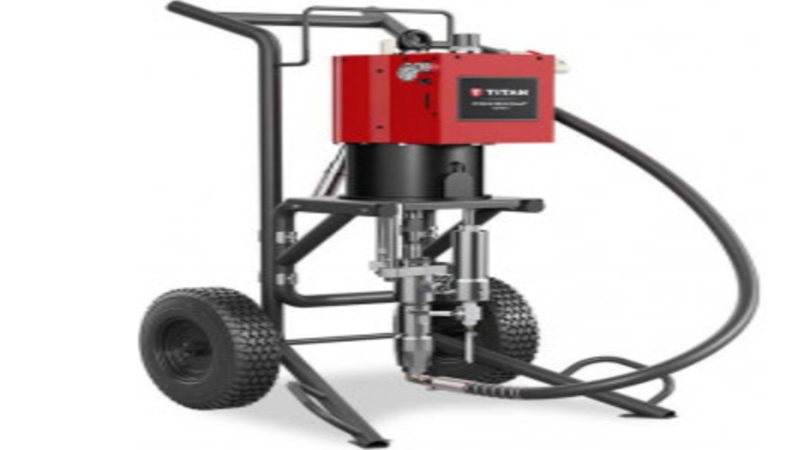
Air-powered airless sprayers like the Speeflo Commander and Titan PowrCoat series are built for sustained industrial duty — and that duty cycle means certain components wear at a predictable, faster rate than others. Knowing which parts fail first lets contractors stock the right inventory and catch problems before they become job-site emergencies.
After years supplying parts for this equipment category specifically, a clear wear hierarchy emerges. Here’s what goes first, what goes second, and what you can generally expect to last the life of the machine.
First to Wear: The Packing
Across every air-powered airless sprayer we supply parts for, packing is the highest-turnover component by a wide margin. The packing seals the piston rod and is in continuous contact with coating material, solvent, and the mechanical friction of every stroke under sustained high-pressure operation.
Air-powered machines compound this wear factor because they’re typically running at higher duty cycles than electric sprayers — that’s the whole point of the air-powered design. More cycles per hour means more wear cycles on the packing per hour of use.
Signs of packing wear: material in the wet cup, gradual pressure loss, increasing priming time. For air powered sprayer parts including packing kits for Speeflo Commander, Admiral, and Titan PowrCoat models, keeping a spare kit on hand is the single highest-value inventory item for these machines.
Second to Wear: Inlet and Outlet Valves
Valve components wear at a meaningfully slower rate than packing but still faster than most other parts on the machine. The ball and seat surfaces in both the inlet and outlet valve assemblies are subject to repeated high-pressure impact on every cycle — thousands of times per hour of operation.
On air-powered equipment specifically, valve wear shows up as pressure cycling (a rhythmic pulsing in the spray pattern) and gradual output reduction at the same pressure setting. These machines typically handle high-volume, continuous-duty applications such as elastomeric coatings, roof coatings, and industrial maintenance painting. If operators fail to address valve wear promptly, sustained operation quickly accelerates the damage.
The practical approach for air-powered equipment in regular industrial use: replace both valves alongside every packing service rather than waiting for individual valve failure. The labor to access them is identical to a packing-only service, and replacing both prevents a return trip to the bench weeks later.
Third: Air Motor Seals and Components
This is the wear category unique to air-powered equipment — the pneumatic motor that drives the fluid section has its own service life, separate from the fluid section itself. Air motor wear is almost always driven by one factor: air supply quality.
Contaminated compressed air — carrying water vapor or compressor oil — degrades air motor seals significantly faster than clean, properly filtered air. Machines running on poorly filtered air supply may see air motor component wear at two to three times the rate of machines with proper moisture separation and oil removal filtration in place.
This is the maintenance item most often overlooked on air-powered sprayers, because the air supply system sits upstream of the sprayer itself and doesn’t get the same routine attention as the fluid section. Draining moisture separators daily and replacing filter elements on schedule protects this component category directly.
Fourth: Piston Rod
The piston rod itself generally outlasts the packing by a significant margin — when the wet cup is properly maintained. Rod wear is largely a consequence of upstream neglect rather than an independent failure mode: a rod that’s been running with a dry wet cup, or running against worn packing for an extended period, will score and require replacement far sooner than a rod on a properly maintained machine.
For air-powered equipment running heavy-bodied, abrasive materials like elastomeric and roof coatings, rod wear from abrasive contact is also a meaningful factor independent of packing condition. Always inspect the piston rod surface at every packing service — a scored rod installed against fresh packing destroys that packing in a fraction of its expected service life.
Fifth: Suction and Hose Components
Suction hoses, strainers, and high-pressure hose assemblies wear gradually over the machine’s service life, primarily through mechanical fatigue at fittings and connection points rather than the high-cycle wear that affects the fluid section. These components typically need attention on a seasonal or annual basis rather than the more frequent intervals required for packing and valves.
That said, a cracked suction hose produces symptoms — priming failure, inconsistent suction — that closely mimic fluid section problems. When troubleshooting a priming issue on air-powered equipment, checking the suction assembly before assuming the fluid section has failed saves significant diagnostic time.
What Rarely Wears: The Fluid Section Housing and Pump Body
The cylinder bore and pump body itself, properly maintained, generally outlast every other component on the machine by a wide margin. Proper maintenance can prevent catastrophic damage to these components. Running the equipment with severely worn packing or a scored rod for an extended period typically causes this type of damage, rather than normal wear.
This is worth emphasizing because it reframes the maintenance priority correctly: the goal of regular packing and valve service isn’t just to address those components directly — it’s to protect the much more expensive pump body and cylinder bore from the secondary damage that results when wear components fail and keep running anyway.
Building a Stocking Strategy Around This Wear Order
For contractors running Speeflo Admiral parts or similar air-powered equipment regularly, the wear hierarchy above translates directly into an inventory priority:
Always on the shelf: Packing kit, inlet valve, outlet valve — the components most likely to need replacement on any given service interval.
Seasonal stock: Air motor seal kit, suction hose, strainer — components that wear more slowly but are worth having available rather than waiting on shipping.
Order as needed: Piston rod, fluid section housing components — generally only needed when inspection reveals damage, rather than on a predictable schedule.
This priority order, built directly from which components actually fail first in real field use, is more useful than a generic “replace everything annually” approach — it puts your maintenance budget and your parts shelf where the actual wear happens.
Nnanna Otuonye is the founder of AllTitanParts.com, an authorized OEM dealer of Titan, SprayTech, Wagner, and Speeflo airless sprayer parts located at 5250 Gulfton St, Suite 1H, Houston, Texas 77081. With over 20 years in the spray equipment industry, he supplies painting contractors and industrial coating professionals across the United States with genuine factory parts and same-day shipping.