
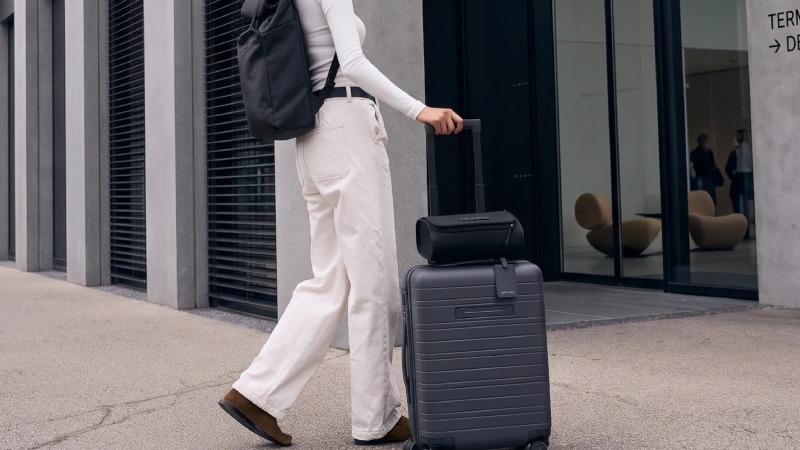
Yes, a duffel bag can be a carry-on if it meets your airline’s size and weight requirements. Most major U.S. airlines allow carry-on bags up to 22 × 14 × 9 inches, while smaller duffel bags may qualify as personal items if they fit under the seat. Always measure your packed bag before traveling, as soft-sided duffel bags can expand beyond airline limits.
Introduction
If you’ve ever packed for a weekend getaway or business trip, you’ve probably wondered:
Can a duffel bag be a carry-on?
The short answer is yes, but whether your duffel bag is accepted depends on more than just its listed dimensions.
Unlike hard-shell luggage, a duffel bag is made from flexible materials that expand or compress depending on how you pack it. A bag that’s airline-approved when half full may exceed the allowed dimensions once it’s packed to capacity. That’s why travelers are often surprised when a bag advertised as “carry-on friendly” is stopped at the boarding gate.
Understanding airline baggage rules before you fly can save you from unexpected baggage fees, gate-checking delays, and the frustration of reorganizing your belongings in front of a boarding line.
In this guide, you’ll learn:
- Whether a duffel bag qualifies as a carry-on.
- When it can also be used as a personal item.
- Carry-on size limits for major U.S. airlines.
- TSA rules for traveling with a duffel bag.
- How airlines actually measure soft-sided luggage.
- Packing tips that help you avoid extra baggage charges.
- The features to look for when choosing the right travel duffel bag.
Whether you’re flying for business, taking a weekend trip, heading to the gym before your flight, or traveling internationally, this guide will help you pack smarter and travel with confidence.
Can a Duffel Bag Be a Carry-On?
Yes.
A duffel bag can absolutely be used as a carry-on bag, provided it complies with your airline’s carry-on size and weight restrictions.
For most U.S. airlines, the standard carry-on dimensions are:
22 × 14 × 9 inches (56 × 36 × 23 cm)
These measurements include:
- Handles
- Exterior pockets
- Wheels (if applicable)
- Compression straps
- Any other protruding parts
Unlike rigid suitcases, a soft-sided duffel bag offers an advantage because it can compress slightly to fit into an overhead bin or airline sizing frame. However, that flexibility only helps if the bag isn’t overpacked.
For example, a travel duffel bag measuring 21 inches long may still exceed the limit if the side pockets are fully loaded or the bag bulges after packing. Airlines evaluate the bag in the condition you present it at the gate—not how it looked when it was empty.
Another factor to consider is weight. While many U.S. airlines focus primarily on size, some international airlines and low-cost carriers enforce strict carry-on weight limits ranging from 7 kg to 10 kg (15–22 lbs). Even if your bag fits within the dimensions, exceeding the weight allowance may require you to check it.
Quick Tip
Before leaving for the airport:
- Pack your duffel bag completely.
- Tighten all compression straps.
- Measure the bag at its widest points.
- Weigh it if you’re flying internationally.
A few minutes of preparation can help you avoid unexpected fees and delays.
Can a Duffel Bag Be a Personal Item?
In many cases, yes.
A smaller duffel bag can qualify as a personal item, provided it fits comfortably underneath the seat in front of you.
Personal items typically include:
- Small duffel bags
- Laptop bags
- Backpacks
- Handbags
- Briefcases
Unlike carry-on bags, personal items are stored beneath the seat rather than in the overhead compartment.
Each airline sets its own size limits.
Here are examples from several major U.S. carriers:
| Airline | Typical Personal Item Size |
| Delta Air Lines | 18 × 14 × 8 in |
| United Airlines | 17 × 10 × 9 in |
| JetBlue | 17 × 13 × 8 in |
| Southwest Airlines | 16.25 × 13.5 × 8 in |
| American Airlines | Approximately 18 × 14 × 8 in |
One common mistake is assuming every airline uses the same dimensions.
United Airlines, for example, has one of the narrowest personal item allowances. A bag that fits comfortably under Delta’s rules may exceed United’s width limit.
If your duffel bag is intended as a personal item, choose one specifically designed for under-seat storage rather than relying solely on the manufacturer’s “personal item approved” label.
Carry-On Size Limits for Major U.S. Airlines (2026)
Although most airlines use similar carry-on dimensions, there are important differences in personal item allowances and baggage policies.
| Airline | Carry-On Size | Personal Item |
| Delta Air Lines | 22 × 14 × 9 in | 18 × 14 × 8 in |
| American Airlines | 22 × 14 × 9 in | Approximately 18 × 14 × 8 in |
| United Airlines | 22 × 14 × 9 in | 17 × 10 × 9 in |
| Southwest Airlines | 24 × 16 × 10 in | 16.25 × 13.5 × 8 in |
| Alaska Airlines | 22 × 14 × 9 in | Approximately 18 × 14 × 8 in |
| JetBlue | 22 × 14 × 9 in | 17 × 13 × 8 in |
Why This Matters
Many travelers buy a duffel bag labeled as “airline approved” without realizing that airlines have different personal item requirements.
A bag that works perfectly on Southwest Airlines might be too wide for United Airlines or too tall for another carrier’s under-seat dimensions.
Checking your airline’s baggage policy before traveling is one of the easiest ways to avoid unnecessary baggage fees.
How Airlines Measure Duffel Bags
One of the biggest misconceptions travelers have is believing airlines measure only the manufacturer’s advertised dimensions.
In reality, airlines evaluate the packed bag, not the empty one.
When measuring a duffel bag, airline staff consider:
- Overall length
- Width
- Height
- Handles
- Exterior pockets
- Compression straps
- Any items causing the bag to bulge
Because duffel bags are made from soft materials, two identical bags can produce different measurements depending on how they’re packed.
For example:
Imagine two travelers carrying the exact same duffel bag.
The first traveler packs only clothing for a weekend trip, leaving some extra space inside. The bag compresses easily and fits into the airline sizing frame without issue.
The second traveler fills every compartment with shoes, electronics, toiletries, and souvenirs. Although it’s the same bag, it expands beyond the carry-on dimensions and may need to be checked.
This is why experienced travelers recommend packing your duffel bag to 80–90% of its capacity instead of filling every available inch.
Leaving a little flexibility allows the bag to compress naturally if airline staff ask you to place it inside a sizing frame.
TSA Rules for Carry-On Duffel Bags
Getting your duffel bag through airport security isn’t difficult, but understanding the Transportation Security Administration (TSA) rules can make the screening process faster and less stressful.
While the TSA doesn’t regulate the size of your carry-on—that’s up to each airline—it does regulate what you can pack inside your bag.
Liquids Must Follow the 3-1-1 Rule
If you’re carrying toiletries in your duffel bag, they must comply with the TSA’s 3-1-1 liquids rule:
- Containers must be 3.4 ounces (100 ml) or smaller
- All liquids should fit inside one clear, quart-sized bag
- Each passenger is allowed one liquids bag
Keeping toiletries in an easily accessible compartment can save time during security screening.
Laptops and Electronics
Most airports now allow travelers to leave laptops inside their bags when using newer CT scanners. However, many airports still require laptops to be removed.
For a smoother screening experience:
- Place your laptop near the top of the bag.
- Keep tablets and large electronics easy to access.
- Avoid wrapping charging cables tightly around devices.
Power Banks
Power banks and spare lithium-ion batteries must travel in your carry-on bag. They are not permitted in checked baggage because of fire safety regulations.
If your duffel bag is unexpectedly gate-checked, remove your power bank before handing it over.
Medication
Prescription medications, medical devices, and essential medical supplies should always stay in your carry-on duffel bag.
Never pack important medications inside checked luggage, especially if you’re taking connecting flights.
Shoes and Metal Items
If your duffel bag includes a dedicated shoe compartment, airport security inspections become much easier. Shoes remain separated from clothing, reducing the need to unpack your entire bag if additional screening is required.
International Airlines vs. U.S. Airlines
Many travelers assume airline baggage rules are the same worldwide.
They’re not.
Although most U.S. airlines allow carry-on bags measuring approximately 22 × 14 × 9 inches, international airlines often have stricter requirements.
Some differences include:
| Feature | U.S. Airlines | Many International Airlines |
| Carry-on Size | Usually 22 × 14 × 9 in | Often slightly smaller |
| Weight Limits | Rarely enforced | Commonly 7–10 kg |
| Personal Item | Usually included | May vary |
| Gate Enforcement | Moderate | Often stricter |
Budget airlines are particularly strict about baggage dimensions and weight.
If you’re flying internationally, always verify your airline’s baggage policy before leaving for the airport instead of relying on general carry-on guidelines.
What Happens If Your Duffel Bag Is Too Large?
An oversized duffel bag doesn’t always mean you’ll be denied boarding—but it can become expensive.
Scenario 1: Complimentary Gate Check
When overhead bins fill up, airlines sometimes ask passengers to gate-check carry-on bags free of charge.
This isn’t a penalty. It’s simply a way to free up cabin space.
Scenario 2: Oversized Carry-On
If your duffel bag exceeds the airline’s size restrictions, you’ll usually be required to check it and pay the applicable baggage fee.
Depending on the airline, paying at the gate can cost more than pre-paying online.
Protect Your Valuables
Before surrendering your bag for gate checking, remove:
- Passport
- Wallet
- Laptop
- Power bank
- Medication
- Camera
- Chargers
- Important documents
Keeping these essentials inside a quick-access compartment makes unexpected gate checks far less stressful.
How to Measure a Duffel Bag Correctly
Many travelers measure an empty bag, but airlines inspect the bag exactly as it’s packed.
For accurate measurements:
Step 1
Pack your bag exactly as you would for your trip.
Step 2
Zip every compartment closed.
Step 3
Tighten all compression straps.
Step 4
Measure:
- Length
- Width
- Height
Include:
- Handles
- Exterior pockets
- Shoe compartments
- Bulging areas
Step 5
Compare the measurements with your airline’s published carry-on dimensions.
Taking five minutes to measure your packed bag at home can prevent unnecessary baggage fees at the airport.
Duffel Bag vs. Backpack vs. Rolling Carry-On
Choosing the right travel bag depends on your destination, travel style, and packing habits.
| Feature | Duffel Bag | Backpack | Rolling Carry-On |
| Weekend Trips | ⭐⭐⭐⭐⭐ | ⭐⭐⭐⭐ | ⭐⭐⭐ |
| Business Travel | ⭐⭐⭐⭐⭐ | ⭐⭐⭐ | ⭐⭐⭐⭐ |
| Easy Airport Mobility | ⭐⭐⭐ | ⭐⭐⭐⭐⭐ | ⭐⭐⭐⭐⭐ |
| Flexible Packing | ⭐⭐⭐⭐⭐ | ⭐⭐⭐ | ⭐⭐⭐ |
| Overhead Bin Storage | ⭐⭐⭐⭐⭐ | ⭐⭐⭐⭐ | ⭐⭐⭐⭐ |
| Comfort for Long Walks | ⭐⭐ | ⭐⭐⭐⭐⭐ | ⭐⭐⭐⭐⭐ |
Choose a Duffel Bag If:
- You’re traveling for 2–5 days.
- You want flexible packing.
- You visit the gym before or after flights.
- You frequently take weekend trips.
- You prefer lightweight luggage.
Choose a Backpack If:
- You travel hands-free.
- You carry electronics frequently.
- You hike or walk long distances.
- You’re traveling on budget airlines.
Choose a Rolling Carry-On If:
- You’re packing heavier clothing.
- You have mobility concerns.
- You’ll spend long periods walking through airports.
How to Pack a Carry-On Duffel Bag Efficiently
Packing efficiently isn’t just about fitting more items into your bag—it’s about keeping the bag within airline limits while staying organized.
Roll Your Clothes
Rolling clothes instead of folding them saves space and reduces wrinkles.
Use Packing Cubes
Packing cubes separate clothing categories and make unpacking easier.
Keep Shoes Separate
Use a dedicated shoe compartment whenever possible to keep dirt away from clean clothing.
Place Heavy Items Near the Bottom
This helps the bag maintain its shape and makes carrying it more comfortable.
Keep Liquids Accessible
Store your TSA liquids bag near the top of your duffel for quicker security screening.
Don’t Fill Every Pocket
Leaving 10–20% unused space allows your bag to compress more easily if it needs to fit inside an airline sizing frame.
Features to Look for in the Best Carry-On Duffel Bag
Not every duffel bag is designed for airline travel.
If you travel frequently, prioritize these features:
- Airline-friendly carry-on dimensions
- Water-resistant materials
- Premium vegan leather construction
- Separate shoe compartment
- Durable metal hardware
- Comfortable padded shoulder strap
- Spacious main compartment
- Interior organization pockets
- Reinforced handles
- Strong zippers
- Lightweight construction
If you’re shopping for a travel-ready option, a Premium Vegan Leather Carry-On Duffle Bag offers airline-friendly dimensions, a dedicated shoe compartment, water-resistant materials, and a spacious interior suitable for weekend trips, business travel, and everyday use.
Common Mistakes Travelers Make
Avoid these common carry-on mistakes:
- Measuring the bag while it’s empty.
- Ignoring airline weight limits.
- Forgetting to include external pockets when measuring.
- Packing valuable electronics deep inside the bag.
- Overfilling every compartment.
- Assuming every airline uses identical baggage rules.
- Forgetting to tighten compression straps.
- Carrying prohibited liquids through security.
- Waiting until the airport to check baggage requirements.
- Choosing style over practicality.
Frequently Asked Questions
Can a duffel bag be a carry-on?
Yes. As long as it meets your airline’s size and weight requirements, a duffel bag can be used as a carry-on.
Is a duffel bag considered a personal item?
A smaller duffel bag may qualify as a personal item if it fits under the seat in front of you and complies with your airline’s dimensions.
What size duffel bag fits in an overhead bin?
For most U.S. airlines, a packed bag measuring no more than 22 × 14 × 9 inches fits within standard carry-on limits.
Can I carry both a duffel bag and a backpack?
Yes, many airlines allow one carry-on and one personal item. For example, you might carry a duffel bag in the overhead bin and place a backpack under the seat.
Do airlines weigh carry-on duffel bags?
Many U.S. airlines focus primarily on dimensions, while some international airlines also enforce carry-on weight limits.
Can I pack shoes in my carry-on duffel bag?
Yes. A separate shoe compartment helps keep footwear away from clothing and makes organization easier.
Is a duffel bag better than a suitcase?
It depends on your travel style. Duffel bags are flexible, lightweight, and ideal for short trips, while rolling suitcases are better for heavier loads and longer vacations.
Can I take a leather duffel bag on an airplane?
Yes. Leather and vegan leather duffel bags are commonly used as carry-on luggage, provided they meet airline size and weight requirements.
What should I keep in my carry-on duffel bag?
Keep valuables such as your passport, wallet, electronics, chargers, medications, and travel documents in your carry-on bag rather than checked luggage.
Do compression straps really help?
Yes. Compression straps reduce bulk, improve organization, and can help soft-sided duffel bags fit more easily into airline sizing frames.
Conclusion
A duffel bag is one of the most versatile pieces of travel luggage you can own. Whether you’re heading on a weekend getaway, a business trip, or a short vacation, a properly sized duffel bag can serve as both a convenient carry-on and, in some cases, a personal item.
The key is understanding your airline’s baggage policy, measuring your bag after it’s packed, and choosing features that make traveling easier—such as durable materials, organized compartments, and airline-friendly dimensions. By packing thoughtfully and following TSA and airline guidelines, you can avoid unnecessary fees, move through the airport with confidence, and enjoy a smoother travel experience from check-in to arrival.