
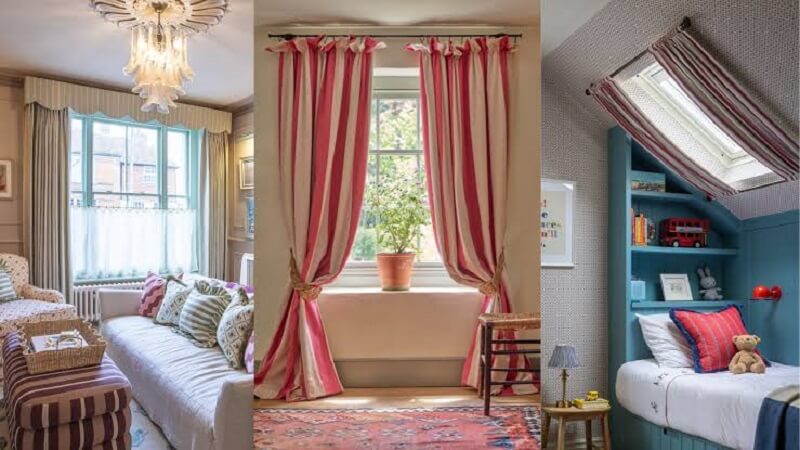
Windows do more work than people give them credit for. They decide how a room feels at 7 a.m., how much your neighbor can see into your living room, and how hard your AC has to work in July. Getting the coverings right doesn’t mean a full renovation either. It’s one of the cheaper fixes that actually moves the needle.
Here’s what’s worth looking at, inside the house and out, whether that’s room darkening window shades for a bedroom that gets too much morning sun or something for the patio.
Nobody Thinks About This Until It’s a Problem
Paint color, furniture, flooring, that’s what people plan first. Window treatments usually get picked last, sometimes literally the week before movers show up.
Which is kind of backwards, because the right ones do a lot:
- Block the sun during the hours it actually bothers you
- Take the edge off street noise
- Give you privacy without shutting off airflow
- Keep cooling costs from creeping up in summer
- Make the house look finished from the curb
Room Darkening Window Shades, or How to Sleep Past Sunrise
Anyone who’s tried sleeping in with sunlight cutting straight through cheap blinds knows the problem. Room darkening window shades exist for exactly that.
The fabric’s woven tighter, sometimes with a liner added, so it stops most of the light instead of just softening it the way a regular shade does.
Rooms Where This Actually Matters
- Bedrooms, obviously, especially for shift workers or late sleepers
- Nurseries, since babies and toddlers do better on a consistent light schedule
- A home theater or media room where glare wrecks the screen
- Anything facing south or west, because that afternoon sun doesn’t play around
Before You Buy One
People mix these up with blackout shades constantly, and they’re not the same thing. Blackout blocks nearly all light. Room darkening still lets some sneak in along the edges, usually where the shade meets the frame.
Cordless and motorized versions are pretty standard now, which matters if there are kids or pets in the house. Fabric choices have also gotten better, so it’s not really a tradeoff between function and how it looks anymore.
Retractable Awnings, the Outdoor Half of This
Shades cover the inside. Retractable awnings handle the patio, the deck, or a window facing straight sun. Pull them out when you want shade, retract them when you don’t.
What They’re Actually Useful For
- Making a patio bearable during peak summer afternoons instead of unusable
- Blocking sun before it even reaches the glass, which keeps the room behind it cooler
- Newer models have motors and wind sensors that pull the awning back on their own before a storm hits
- Adjustable by season, so you’re not stuck with a fixed structure blocking light you might actually want in winter
The Catch
Check the manufacturer specs before assuming an awning can just stay extended through bad weather. Most are meant to be retracted during storms, high wind, heavy snow, that kind of thing. Leave it out and you’re risking the fabric or the frame.
Fabric quality matters more than most people budget for. UV-resistant and water repellent options last a lot longer if you’re somewhere with intense sun or a lot of rain.
Arched Window Shutters, for Houses That Break the Rectangle
Not every window is a box. A lot of homes across the US- Spanish style, Mediterranean, Craftsman- come with arched or half-round windows as part of the design.
Arched window shutters are custom built to follow that curve rather than cutting it off flat, which is what happens when someone tries to force a standard blind onto a rounded window. It never looks quite right.
Why Homeowners Bother
- Keeps the architectural shape of the window instead of covering it up with something square
- Actually controls light, versus leaving the arch bare as a lot of people default to
- Adjustable louvers on most models, so airflow and light can both be dialed in
- Shows up as a detail buyers notice during a walkthrough, which can help at resale
One Thing to Plan Around
These need custom measurements since no two arched windows match exactly. That means longer lead times than a standard shutter order. If there’s a renovation deadline involved, get this measured early or it’ll hold everything up.
Why One Product Rarely Covers Everything
Most houses end up needing a mix rather than a single fix. Something like this tends to work:
- Room darkening window shades for bedrooms and anywhere screens matter
- Retractable awnings over patios or big windows catching direct afternoon sun
- Arched window shutters wherever a standard blind just won’t sit right
Between the three, you’re covering indoor comfort, outdoor heat, and the architectural stuff, instead of expecting one product to do a job it wasn’t built for.
Frequently Asked Questions
Are room darkening window shades the same as blackout shades?
No, though people assume so. Room darkening still lets a little light through around the edges. Blackout is built to block almost all of it.
Can retractable awnings stay extended all year?
Not a good idea. Manufacturers generally recommend retracting during heavy rain, snow, or strong wind. Leaving one out through bad weather can damage the fabric or the motor.
Do arched window shutters cost more than standard ones?
Usually. The custom measuring and building process adds to the price, and the exact difference depends on size and material.
Will room darkening shades make a room too dark during the day?
Not if you pick a cordless or top down bottom up style. Those let you control how much coverage you want at any given time instead of all or nothing.
Do window treatments actually make a difference on energy bills?
They do. Blocking direct sun with shades or awnings takes some pressure off the AC during hot months, and that adds up by the end of a season.