Roofing projects place significant demands on a crew before a single shingle goes down. Bundles of shingles, rolls of underlayment, sheets of plywood, and boxes of fasteners must all be moved from the ground to the roof deck, often several stories up. How that material gets there matters just as much as the quality of the work once it arrives. A poorly planned lift can slow a job, damage materials, or put workers at serious risk. A well-planned lift, on the other hand, keeps the crew moving, protects materials, and reduces the physical strain that builds over a long day.
Why Lifting Method Matters
Many homeowners assume roofing materials are simply carried up a ladder by hand. On small jobs, that may still happen occasionally, but on most modern roofing projects, hand-carrying heavy bundles up a ladder is inefficient and dangerous. Shingle bundles alone can weigh sixty to eighty pounds each, and a typical roof replacement might require dozens of them. Add plywood sheets, ridge caps, and tool bags to that equation, and the physical toll becomes clear. Repeated trips up the ladder increase the risk of slips, dropped loads, or fatigue that leads to mistakes later in the day.
This is where proper rigging and lifting equipment comes into play. Rather than relying solely on manual labor, experienced roofing crews use mechanical assistance to move materials quickly and with far less risk.
Tools That Make the Difference
A few specific pieces of equipment show up again and again on well-run roofing sites.
Lifting beams and spreader bars are used on larger roofing jobs when crews lift wide or bulky loads, such as stacked bundles of sheathing or HVAC curb assemblies on a low-slope roof. A spreader bar keeps the rigging lines from angling inward and crushing the load, protecting both the material and anything attached to it. Lifting beams serve a similar purpose for oddly shaped or rigid loads, spreading the weight across multiple pick points so the load stays level as it rises.
Rigging hooks are a small detail that carries a lot of importance. Properly rated rigging hooks, rated for the load being lifted and fitted with a safety latch, keep a sling or chain securely attached during the lift. Using the wrong hook, or one without a latch, is a common cause of dropped loads on job sites of all kinds, including roofing.
Wire rope slings are often chosen over standard fabric slings when a job involves rougher material edges, higher heat exposure, or heavier loads that require a more durable connection between the hoist and the material. Wire rope slings hold up well against abrasion from metal roofing panels or sharp-edged equipment, and they offer a level of strength that some lighter-duty slings cannot match.
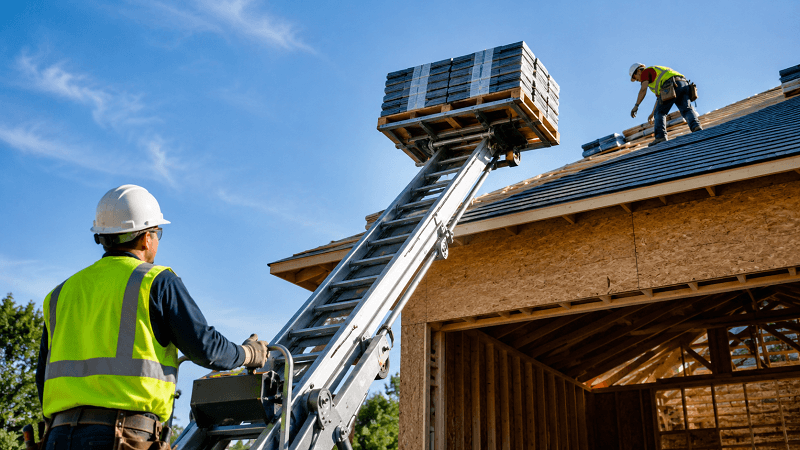
Material hoists are among the most common tools for lifting bundles of shingles directly to the roofline. These conveyor-style lifts run along an extension ladder or a freestanding frame and carry material up at a controlled pace, keeping workers off ladders while carrying heavy loads.
Ladder lifts work similarly and are especially popular for steep or multi-story homes. They reduce the number of times a worker needs to climb up and down, which cuts down on both time and fatigue.
Rope-and-pulley rigging still has a place on many jobs, particularly for smaller loads or in tight spaces where a full hoist system is not practical. A simple pulley anchored at the roof edge, paired with a properly rated rope, allows a worker on the ground to send tools or small bundles up while a worker on the roof guides the load into place.
Tag lines are another detail that often gets overlooked but make a real difference in safety. A tag line is a secondary rope attached to a load being lifted, allowing a worker to steady it and keep it from swinging or spinning as it rises. This small addition prevents a load from striking the side of the house, a window, or a worker standing nearby.
Davit arms and gin poles are used on larger commercial roofing jobs where heavier equipment or bundled materials must be lifted well above ground level. These rigging components extend outward from the roof edge and provide a stable anchor point for a winch or pulley system, enabling controlled vertical lifts even when the load is heavy or awkwardly shaped.
Cargo straps round out the list by keeping bundles secure once they reach the roof. Loose shingle bundles or stacks of plywood can shift on a sloped surface, so securing them properly prevents a slide that could injure someone below.
Taken together with the hoists, pulleys, tag lines, davit arms, and cargo straps already mentioned, these additions complete a comprehensive rigging toolkit. The goal on every job is the same: match the equipment to the load, confirm that everything is rated for the weight involved, and give the crew a system they can trust before anything leaves the ground.
Safety First, Speed Second
It is tempting to think of these tools purely as a way to save time, and they do save time, but the bigger benefit is safety. Every trip up a ladder while carrying a heavy bundle is an opportunity for a misstep. Every load lifted without a tag line is an opportunity for it to swing into a worker. Reducing those risks with the right rigging equipment protects the crew first and speeds up the job second.
Weather also plays a role in how materials should be lifted. On windy days, extra caution is needed with any hoisted load, since a gust can catch a bundle of shingles or a sheet of plywood and turn it into a hazard. Crews that plan around weather conditions and use the right equipment for the day tend to avoid the kind of accidents that shut a job down entirely.
The Takeaway
Lifting roofing materials safely is not about a single tool. It is about matching the right equipment, whether that is a material hoist, a ladder lift, a rope-and-pulley setup, or a full davit arm system, to the size and scope of the job. When a crew takes the time to rig materials properly before climbing, the entire project runs more smoothly from the first bundle to the last shingle nailed down.